What is building commissioning?
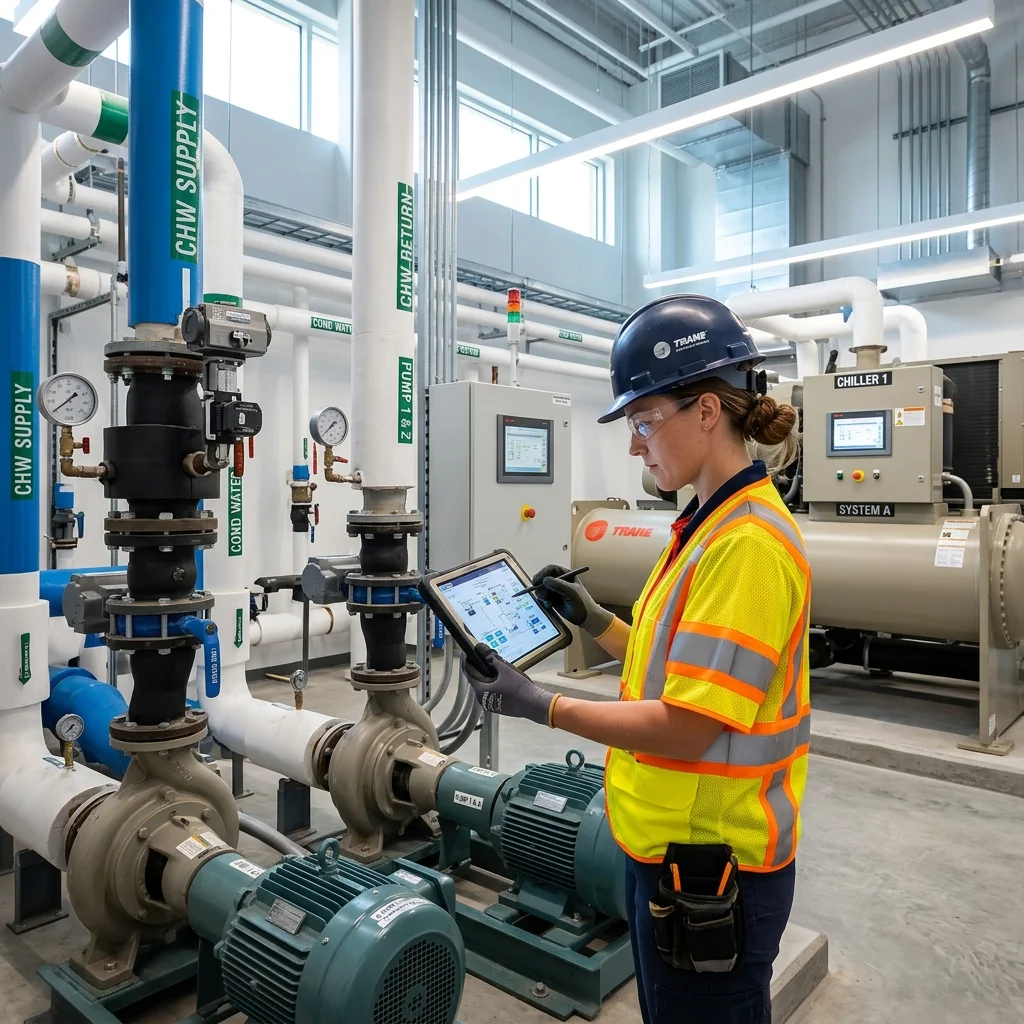
Building commissioning (Cx) is the quality-assurance process that verifies a building's mechanical, electrical, plumbing, and control systems are installed, tested, and operating exactly as designed. In New York City, commissioning isn't just best practice — it's a code requirement. Under Section C408 of the NYC Energy Conservation Code (NYCECC), most new construction and major alteration projects above a defined equipment-capacity threshold must be commissioned by an approved agency before the Department of Buildings (DOB) will sign off on final inspection.
Commissioning begins at the pre-design phase and continues through construction, occupancy, and — for existing buildings — the full life of the asset. It isn't an extra layer of red tape. Done correctly, it reduces change orders and callbacks during construction, shortens the punch-list process, and lowers a building's operating costs for decades afterward.
For existing buildings, the equivalent process is called retro-commissioning (RCx) — and in NYC, it's a legal requirement for most large buildings under Local Law 87.
The Cotocon Group provides both: new-construction commissioning under C408 and retro-commissioning services for existing buildings navigating Local Law 87 and Local Law 97.
Why building commissioning matters in NYC right now
NYC's energy code and climate laws have moved fast:
2025 NYCECC
The 2025 NYCECC (based on the 2024 International Energy Conservation Code) took effect March 30, 2026, replacing the 2020 NYCECC for new applications — and it retains Section C408's mandatory commissioning requirements.
Local Law 97 Caps
Local Law 97 carbon caps have been in effect since 2024, with the next, far stricter emissions limits arriving for the 2030–2034 compliance period. Based on 2024 benchmarking data, an estimated 57% of covered buildings are projected to exceed their 2030–2034 limits if nothing changes.
Local Law 87 Audits
Local Law 87 requires energy audits and retro-commissioning every 10 years for most buildings over 50,000 gross square feet — and non-compliance is not optional. Penalties start at $3,000 for the first missed year and $5,000 for every year after.
Commissioning and retro-commissioning sit at the intersection of all three. They're often the fastest, lowest-cost way to shrink a building's carbon footprint before committing capital to major retrofits.
New Construction & Alterations
New construction and major alterations are required to commission mechanical, service water heating, and renewable energy systems under NYCECC Section C408 when the project exceeds these thresholds:
- Cooling capacity of 480,000 Btu/h (roughly 40 tons) or more
- Combined space-heating and service water-heating capacity of 600,000 Btu/h or more
- Renewable energy systems with a generating capacity of 25 kW or more
If your project's TR8 form ("Statement of Responsibility for Energy Code Progress Inspections") triggers this requirement, your project cannot pass final DOB inspection without documented evidence of commissioning.
Systems Typically Covered:
Existing Buildings
Existing buildings need retro-commissioning if any of the following apply:
- The building has never been commissioned or re-commissioned
- Certain systems have never operated correctly since installation
- The building has been renovated, expanded, or repurposed
- Operating costs are climbing faster than utility rates
- Tenant or occupant comfort complaints (too hot, too cold, poor air quality) are increasing
- Your building is on DOB's Local Law 87 Covered Buildings List and approaching its 10-year filing cycle
Retro-commissioning services in NYC
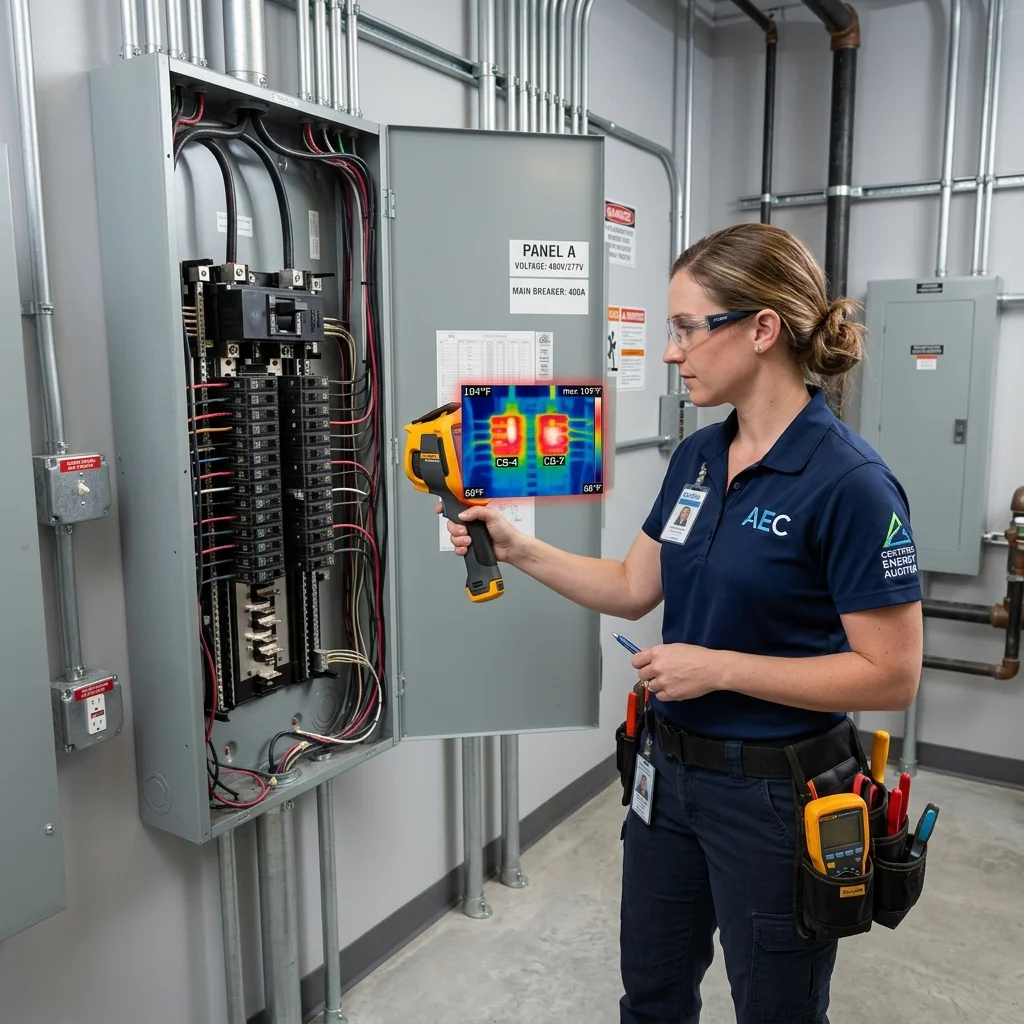
Retro-commissioning (RCx) investigates, tests, and optimizes the systems of an existing building against its Current Facility Requirements (CFR) — closing the gap between how a building was designed to run and how it's actually running today. Over time, sensors drift out of calibration, control sequences get overridden, and equipment operates far outside its original design intent. RCx finds and fixes those problems, typically without replacing major equipment.
Benefits of Retro-Commissioning:
Cotocon's retro-commissioning work follows ASHRAE Guideline 0.2 and Guideline 1.2-2019 for existing HVAC&R systems, and is structured to satisfy Local Law 87's audit and retro-commissioning filing requirements. For a deeper look at our LL87-specific process, see our Retro-Commissioning services page and our Local Law 87 compliance page.
How commissioning helps with Local Law 97 compliance
Local Law 97 sets hard carbon emissions caps for most buildings over 25,000 square feet, with penalties of up to $268 per metric ton over the limit. Commissioning and retro-commissioning support LL97 compliance in several concrete ways:
Cheapest Carbon Reduction Available
Because RCx optimizes equipment you already own — recalibrating sensors, correcting control sequences, fixing scheduling errors — it typically costs a fraction of a capital retrofit while still cutting measurable energy use and emissions.
Documented Compliance Prerequisite
Maintaining current Local Law 84 (benchmarking) and Local Law 87 (audit/RCx) compliance is generally required to access "good faith effort" and mediated-resolution pathways that can reduce LL97 penalty exposure.
Mandatory for Certain Buildings
Under LL97's Article 321, affordable housing, buildings with more than 35% rent-regulated units, and houses of worship can meet their obligation through the Prescriptive Pathway — implementing a defined list of Prescriptive Energy Conservation Measures (PECMs) and filing a report certified by a qualified retro-commissioning agent.
Surfaces Capital Plan Data
A retro-commissioning study identifies exactly which systems are driving excess emissions, so capital dollars for the tougher 2030–2034 and 2035+ compliance periods go toward the upgrades that matter most.
Our commissioning process
OPR Review
We confirm the performance, comfort, and compliance goals the building is being designed or optimized against.
System Discovery
For existing buildings, we gather design docs, operation sequences, and maintenance history; for new construction, we review design and construction files against the OPR.
Field Testing
Equipment is tested under full-load, part-load, and emergency/failure conditions to confirm it performs as specified.
Correction & Tuning
Findings are logged, prioritized, and — where required by code or law — corrected before final reporting.
Reporting & Filing
We prepare the Preliminary and Final Commissioning Reports under C408, or the Energy Efficiency Report (EER) under Local Law 87, and file with the DOB.
Manual & Training
Operations and maintenance teams receive documentation and training so performance gains persist over time.
Why work with Cotocon, a NYC building commissioning company
The Cotocon Group is a sustainability consulting firm based in New York City and a licensed general contractor in Florida, with deep, ongoing focus on NYC's building energy compliance landscape — Local Law 97, Local Law 84, Local Law 87, Local Law 88, and NYCECC Chapter 4 requirements. Because compliance and commissioning are what we do, our reports are built to hold up to DOB scrutiny the first time, and our recommendations are framed around your building's actual Local Law 97 emissions trajectory — not just a generic checklist.
Frequently Asked Questions
Commissioning is triggered under NYCECC Section C408 when a new construction, addition, or alteration project installs mechanical or service water-heating equipment above code thresholds — currently 480,000 Btu/h of cooling capacity and/or 600,000 Btu/h of combined space-heating and service water-heating capacity, or a renewable energy system of 25 kW or more. If your project meets or exceeds these thresholds, your TR8 form will flag commissioning as required, and DOB will not grant final sign-off without a completed Preliminary Commissioning Report.
For new construction, commissioning spans the full project timeline — from Owner's Project Requirements development in pre-design through construction, functional testing, and final reporting. NYCECC requires the Final Commissioning Report within 18 months of the Certificate of Occupancy (30 months for buildings 500,000+ gross square feet, excluding R-2 occupancies). For retro-commissioning under Local Law 87, most mid-size buildings need roughly 6–12 months from engaging an auditor/RCx agent to filing a completed Energy Efficiency Report — building owners are generally advised to start planning 12–18 months ahead of their compliance-year deadline, since qualified engineers book up quickly during peak filing years.
Cost depends heavily on building size, system complexity, and scope. Nationally, a large-scale study of roughly 1,500 buildings (LBNL/Building Commissioning Association, 2018) found a median cost of about $0.82 per square foot for new-construction commissioning and about $0.26 per square foot for existing-building retro-commissioning — with retro-commissioning payback periods often under two years. Actual NYC pricing varies with equipment count, building age, and the extent of deficiencies found, so the most accurate figure comes from a scoping conversation with a commissioning provider.
Yes. Retro-commissioning is generally one of the lowest-cost ways to cut a building's carbon emissions before considering a capital retrofit, because it optimizes equipment you already own rather than replacing it. It's also woven directly into LL97's compliance structure: Article 321 buildings (certain affordable and rent-regulated housing, and houses of worship) can satisfy their obligation through a Prescriptive Pathway that requires sign-off from a qualified retro-commissioning agent, and maintaining Local Law 87 compliance is generally necessary to access LL97's good-faith and penalty-mitigation pathways.
